Friday, April 30, 2010

Racism in Iceland?


There have been many debates on Iceland being a racist country and how some of it may have been announced during the Cold War. “In 1951 U.S.-Icelandic Defense Agreement paved the way for a permanent U.S. military presence at the Keflavik base in Iceland, an outpost that played a crucial role in U.S. strategy during the Cold War” ( Marquette Warrior: Racial Purity in Iceland). This article basically states that black U.S. troops are not allowed on the Iceland base. They argue that it is not because they are racist but are trying to protect their women and to preserve a homogeneous “national body”.
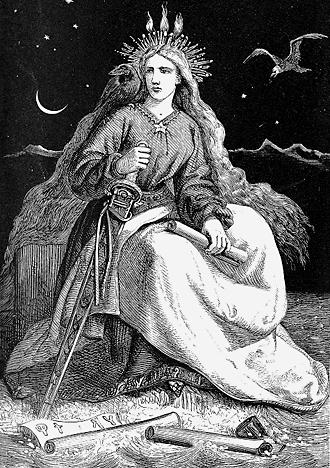
This is not the only racist act that Iceland has made. Iceland has a “God-like” figure that is called Fjallkonan or in English, the Lady of the Mountain. Her skin color is also, white. An editor of an Iceland magazine decided to pose a black model of Fjallkonan and no one would buy him. This just shows one more example of Iceland being a racist country.
Iceland today is still not tolerant of African American people. They are so closed off from every other race but their own and that issue has caused many of conflicts. Helping Iceland even when they did not agree to change their racial views was a horrible mistake of us to make. It showed our African Americans that we did not care if they were treated unequally. Of course some say that we did not really have a choice in the matter, if we wanted to keep a military base in Iceland. That may be true and the U.S. did fight for their rights but while it was being considered, we acted like nothing was wrong and kept going along with our defense agreement.
Another source speaks from personal experience in his blog of racism in Iceland. He says that while he was meeting with someone the secretary referred to him as “the foreigner”. He explains how that upset him and how he truly saw how blocked off from other races the country was.
One could argue and say that almost every country has gone through their racist times but haven’t most countries matured and realized that everyone is equal? It is time that Iceland realizes that! Although they have shown many signs of equality, most citizens are still judging people on the color of their skin. This is completely unjust and cruel and needs to be stopped. To be cruel to someone by their appearance in just completely wrong and kept brilliant soldiers from being able to stay at one of our bases in the Cold War. Iceland needs to grow up and apologize for the hurt that they caused African Americans, Asians, etc. during the Cold war era because many people remember it and think that it was completely wrong. You can type racism in Iceland and it will pull up so many accounts. It is disturbing how evil they can be toward difference. I am sure that they can pull through sooner or later, hopefully sooner.

Thursday, April 15, 2010

The truth on “The persistence of memory”

Surrealism: a cultural movement that began in the early 1920s, and is best known for the visual artworks and writings of the group members.
The Persistence of Memory was a very intriguing painting by Salvador Dali. It included “melted” watches and a landscape of cliffs and a body of water. The Persistence of Memory is a surrealist painting. The original title of this painting is "La persistencia de la memoria" and it depicts a fetus-like head lying on the ground, like a fish that was washed ashore and now decaying after a lost struggle gasping for air. There are four watches in this painting, three of which appear to be molten, as if made out of cheese. The only watch whose structure doesn't appear to be malformed - unlike other watches it is orange in color - is sitting on a desk-like object. There have been many discussions and arguments about what was going on in Dali’s head when he painted this work, and why he chose the objects…such as the clocks. Most people think that the watches are deterministic. “The landscapes in many of Dali's paintings, including The Persistence of Memory, resemble Port Lligat, the home of Salvador Dali. More than often Dali uses sandy beaches, corrupted by age sail boats, and other imagery he had been exposed to as a child in his home town.” (Authenticsociety.com)

What was going on in Dali’s head in unknown today, but there are assumptions of psychotic breakdowns, just plain craziness, and other explanations for his surreal paintings. Whatever was in his head enabled Dali to demonstrate his personal obsessions and fantasies by uncovering and meticulously fashioning hidden forms within pre-existing ones. DalĂ­ was highly imaginative, and also had an affinity for partaking in unusual and grandiose behavior in order to draw attention to himself. Often times this strange behavior irritated those who loved his artwork. Because his eccentric manner sometimes drew more public attention than his art, Dali’s behavior also irritated his critics. “When Salvador Dali was just a child he was said to have hallucinations of kangaroos drowning in their mother’s pouches and he had a several imaginary friends as well.” (http://creativityandanomalousexperience.blogspot.com). Dali was also paranoid and obsessive about unusual things. All of these facts point to one possibility, that there was really was no point or “secret” behind The Persistence of Memory, just a crazy man painting a weird picture. Many still believe that there is truly no reason or meaning in the painting, and that Salvador Dali was just an odd artist trying to have fun by painting an odd picture, playing with the minds of others. There are still to this day historical and artistic discussions on this particular painting as well as many others of his, but the point is stop trying to find out this hidden mystery because there is not one. It is a waste of time. People need to understand Dali’s background and they will come to the same conclusion…Salvador Dali was a very strange man and an amazing artist, with a lot of time on his hands.

Friday, April 2, 2010

Truman's reason for dropping the atomic bomb.

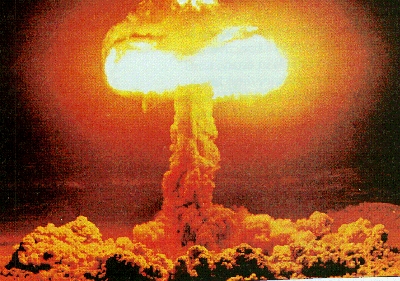
World War II was the most horrifying and devastating war the world has ever seen. It was filled with death, genocide, depression, and extreme nationalism. We, the United States, did take a part in one of the most devastating things during the war: Dropping the atomic bomb. There are many arguments about whether it was necessary for president Truman to drop the atom bomb or if it was just to intimidate the Soviet Union. President Truman said he dropped the bomb to save American lives and that many Americans would have died if they would have invaded Japan. Another reason that people gave was that Japan had bombed China and killed millions and the Japanese would not give up unless something as bad as the atomic bomb was dropped. The truth is, the atomic bomb was not at all necessary to end the war. The U.S. had already blocked off the ocean surrounding Japan and it was obvious that the Japanese would not be going anywhere. If Truman would have waited a week or two, Japan would have surrendered but he knew that. Truman also knew that if he did drop the bomb, the Soviet Union would be deathly afraid of what could happen to them if they happened to mess with the United States. President Truman's reason for dropping the atomic bomb was to intimidate the Soviets and stop future competition between the two countries.
It is true that America gave Japan an ultimatum called the Potsdam Declaration. Basically, it said surrender or get bombed. Japan ignored the choice so many say they had it coming, but did they? Stop and think of all the incredibly innocent people that were killed from the bomb and its effects. Many Japanese wanted the government to surrender but it was not their choice. If we would have waited a tad bit longer then we could have spared millions. Not only did civilians die from flames, they also died from debris, radiation sickness, leukemia, and other horrible effects from the atomic bomb.
“During the second week of Allied deliberations at Potsdam, on the evening of July 24,1945, Truman approached Stalin without an interpreter and told him that the United Stated had a new weapon of unusual destructive force” ( The Manhattan Project: An interactive History). This quote clearly shows the intimidation that President Truman was projecting while talking about the weapon to Joseph Stalin. Why would Truman talk to Stalin about the atomic bomb if he did not want to scare him and the Soviets? It would not make sense. The president wanted to give him a little scare that basically said, “watch out”. President Truman was very concerned about whether or not the Soviet Union would remain in Eastern Europe he also wanted Stalin to know that the Soviet Union did not need to invade Japan as agreed to at the Yalta.
Truman had a right to want to give the Soviet Union fear but was it worth the expense of thousands of Japanese lives? Some say that it was good to intimidate the Russians because we did not, under any circumstances, want another world war. The United States was terrified of the Soviet Union, but who wasn’t? They were a powerful nation with a psychopathic leader. That does not give Truman the right to use Japan as an example of what the U.S. could do to Russia, but that is exactly what he did. The dropping of the atomic bomb was one of the most difficult decisions anyone has ever had to make, but if you could go back in time, what would you do?


Word Count: 611

Followers

About Me

My photo
I attend San Clemente High School and am very interested in History and finding out new things about the history that I am interested in.